How to choose the window profile.
68, 78 or 90 mm: what the thickness means and which house each one suits.
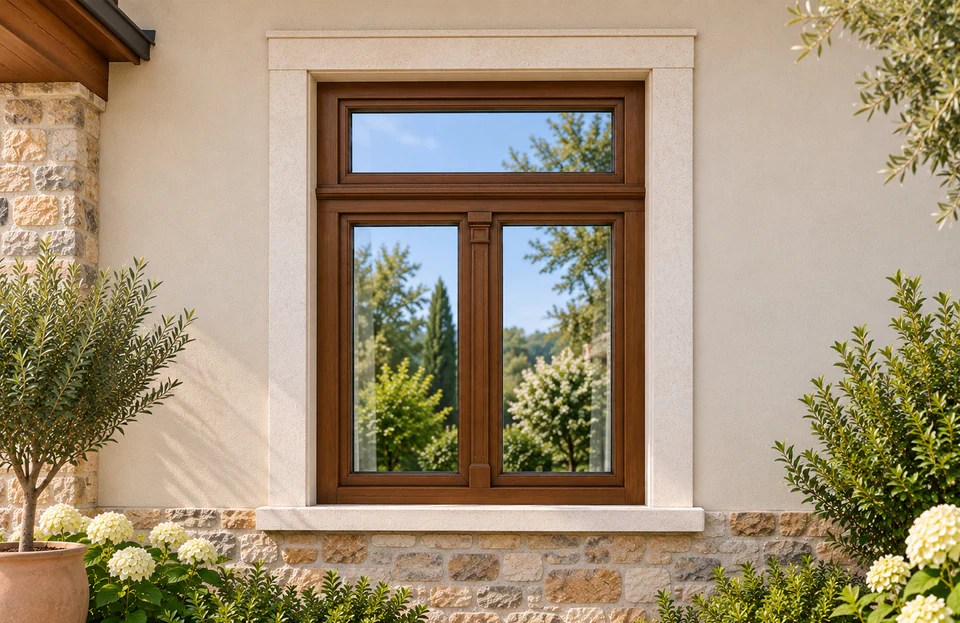
In short
- The figure is the thickness of the wood the frame and the sashes are made of, measured from the outside in. A thicker profile holds thicker insulating glass.
- 68 mm, with double glazing: for renovations and old buildings, where fine proportions matter.
- 78 mm, with triple glazing: the balanced choice for a new house.
- 90 mm, with thicker triple glazing: for passive houses and areas with harsh winters.
What 68, 78 or 90 mm means
The figure in the profile's name is the thickness of the wood the frame, the part fixed in the wall, and the sashes, the part that opens, are made of. It is measured from the side facing the street to the side facing the room.
A thicker profile has room for thicker insulating glass and for more gaskets. That is where the difference in insulation between them comes from. The laminated wood, the corner joints and the hardware are the same on all three.
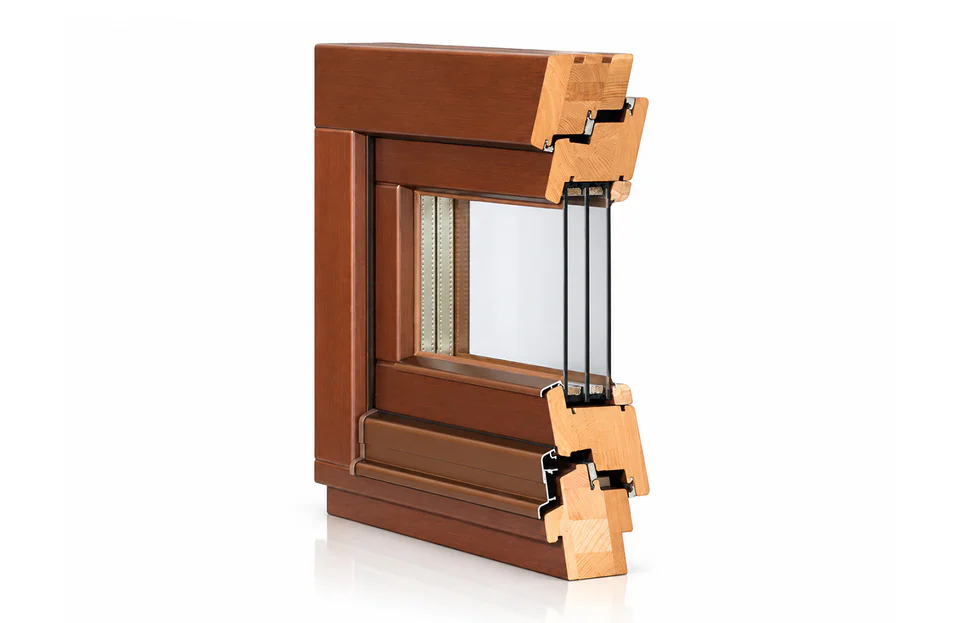
The three profiles, side by side
| 68 mm profile | 78 mm profile | 90 mm profile | |
|---|---|---|---|
| Insulating glass | Double insulating glass, 24 mm (4 + 16 + 4 mm), Low-E, argon-filled | Triple insulating glass, 44 mm (4 + 16 + 4 + 16 + 4 mm), Planitherm 4S and Low-E, argon-filled | Triple insulating glass, 52 mm (4 + 20 + 4 + 20 + 4 mm), Planitherm 4S and Low-E, argon-filled |
| Sealing | Q-Lon gaskets (Schlegel) | 3 Q-Lon gaskets (Schlegel): two on the sash, one on the frame | 3 Q-Lon gaskets (Schlegel): two on the sash, one on the frame |
| Suited to | Renovations and old buildings | A new house | Passive houses, harsh winters |
| Price from | €304/m² + VAT €368 incl. VAT | €365/m² + VAT €442 incl. VAT | €435/m² + VAT €526 incl. VAT |
Prices are starting prices, per square metre, in the most affordable wood. You get the price for your windows in the quote.
What the U value means
How well a window insulates is measured by its thermal transmittance, U, in W/m²K: how much heat passes through one square metre when there is one degree of difference between outside and inside. The lower it is, the less heat the window loses.
A window usually comes with three values:
- Ug, for the glass, measured at its centre (standard EN 673);
- Uf, for the frame: the outer frame and the sashes;
- Uw, for the whole window: it is calculated under standard EN ISO 10077, from the glass, the frame and the edge of the glass.
The glass is the largest part of the window, so it matters most. According to the values published by AGC, one of Europe's large glass makers, double glazing of 4-16-4 mm with a Low-E coating and argon has a Ug of about 1.0–1.1 W/m²K, and triple glazing of 4-16-4-16-4 mm with two Low-E coatings about 0.5–0.6 W/m²K: it loses roughly half as much heat.
A window's Uw is found in its declaration of performance, the document that goes with the CE marking, under standard EN 14351-1. It is declared for a reference window of 1.23 × 1.48 m, so that windows can be compared with each other.
What the Romanian standard asks for
The Romanian methodology for calculating the energy performance of buildings, Mc 001-2022, approved by MDLPA Order no. 16/2023, gives these maximum U values for the windows of homes:
| Building | Maximum U, W/m²K |
|---|---|
| New home, nearly zero-energy (nZEB) | 1.11 |
| Existing home, when renovated | 1.20 |
The values are for the installed window, as an average of the windows of the same kind in the building. The methodology gives them as recommended reference values; what is mandatory for an nZEB building are the energy and emission limits of the whole building. The same methodology asks for the window to be fitted as close as possible to the outer face of the wall.
What it means for you: your designer calculates the whole house, and the windows are one part of the calculation. Ask which Uw went into the design and tell us when you ask for a quote.
The passive house
For a passive house, the Passive House Institute (Germany) asks, in the cool-temperate climate zone of Central Europe, for windows with a Uw of at most 0.80 W/m²K, and at most 0.85 W/m²K once installed. That means triple glazing and a thick frame.
Of our profiles, the 90 mm one, with 52 mm triple glazing, is the one made for such houses. If the project is being certified, ask the designer for the exact requirements and we check them together for your windows.
Which profile to choose
Renovation or old building: 68 mm
Slimmer frames keep the proportions of old windows. The glass is 24 mm double insulating glass, Low-E, argon-filled. If the renovation has to meet the values of the methodology, talk to your designer: double glazing has a Ug of about 1.0–1.1 W/m²K, and the reference value for the whole window, in a renovation, is 1.20.
New house: 78 mm
The balanced choice: 44 mm triple glazing with Planitherm 4S and Low-E, argon-filled, three Q-Lon gaskets and an aluminium drip edge that drains rainwater.
Passive house or harsh winters: 90 mm
The thickest profile in the range and its best insulation: 52 mm triple glazing, with 20 mm between the panes, and the same double sealing.
On any of them: wood-aluminium
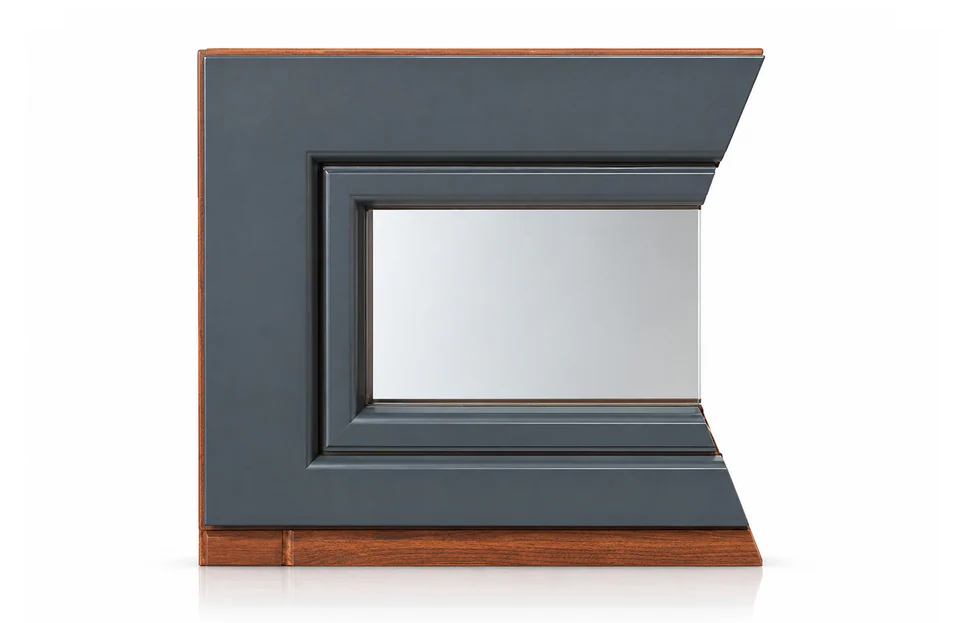
Aluminium cladding on the outside can be added to all three profiles, in RAL colours or wood effect. Indoors the wood stays; outside, the window needs no more upkeep.
Frequently asked questions
Is triple glazing worth it?
It loses roughly half as much heat as double glazing: a Ug of 0.5–0.6 against 1.0–1.1 W/m²K, according to the values published by AGC. It is also heavier, so it needs a thicker profile. For a new house it is the usual choice; in a renovation with old, small openings, double glazing can be enough.
Can I fit a 78 or 90 mm profile in an old house?
Usually yes, if the wall and the opening have room for the thicker frame. It shows at the measurements; tell us from the start what kind of building it is.
What do Low-E and argon mean?
Low-E is a very thin metal coating on the face of the glass that lets light through and turns heat back into the room. Argon is a gas heavier than air, placed between the panes, that conducts less heat. Both lower the Ug value.
Wood-aluminium or wood only?
Wood alone needs a yearly check of the lacquer on the outside, on the side exposed to sun and rain. With aluminium on the outside, the window needs no upkeep outdoors. Indoors it looks the same.
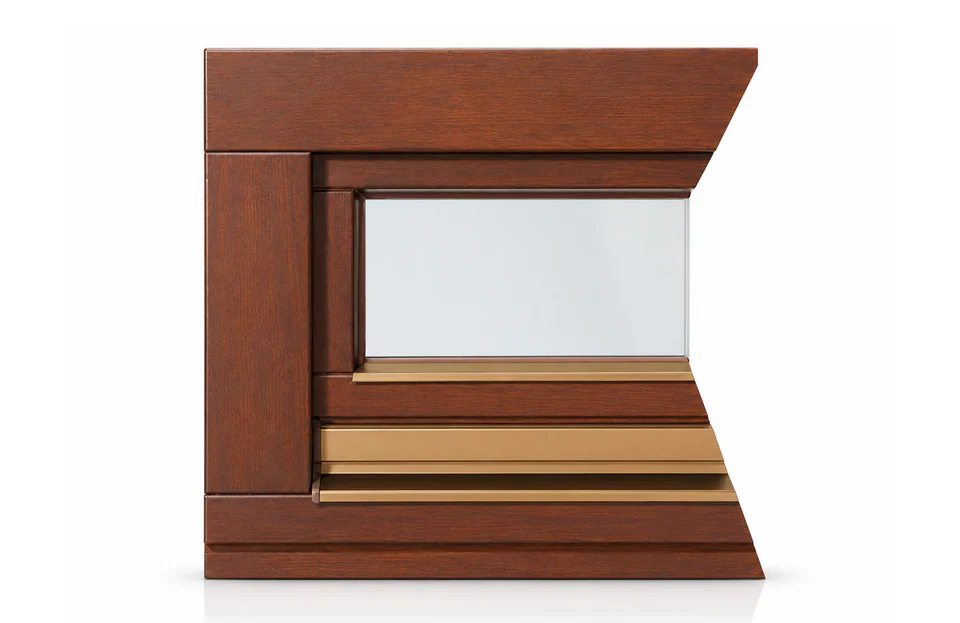
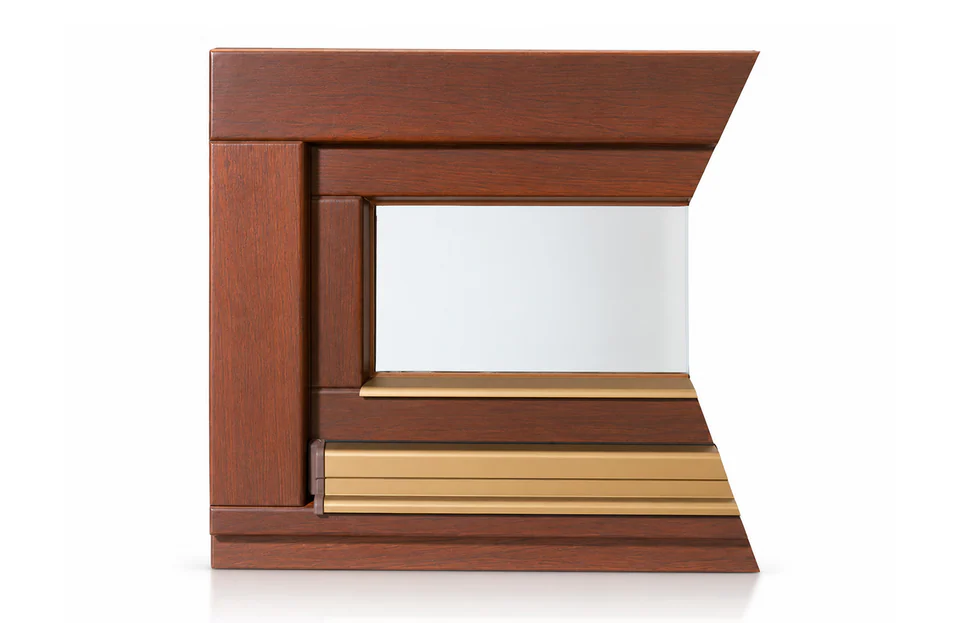
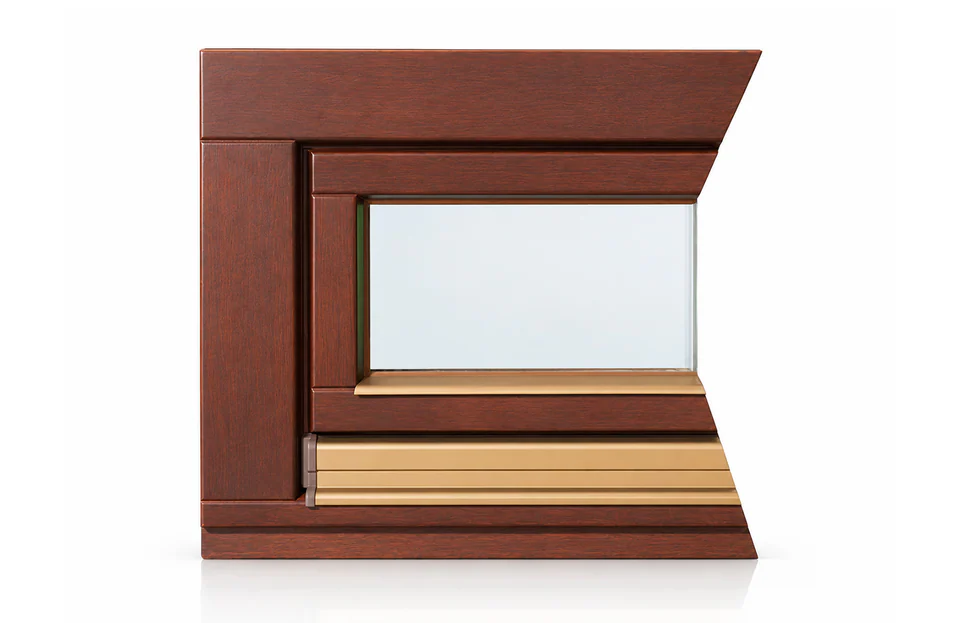
The windows in this guide
Sources
The figures that do not come from our factory are taken from the documents below. Those without a link have no free official copy online.
- Mc 001-2022, Romanian methodology for calculating the energy performance of buildings, tables 2.4 and 2.9a; approved by MDLPA Order no. 16/2023, Official Gazette no. 46 of 17 January 2023 (in Romanian)
- Passive House Institute, certification criteria for windowsPDF
- AGC Glass Europe, Ug values of insulating glassPDF
- EN 14351-1:2006+A2:2016, the product standard for windows and external doors: the 1.23 × 1.48 m reference window
A question that is not here?
Write or call us. You will hear from the people who make the windows, at the factory in Focșani.